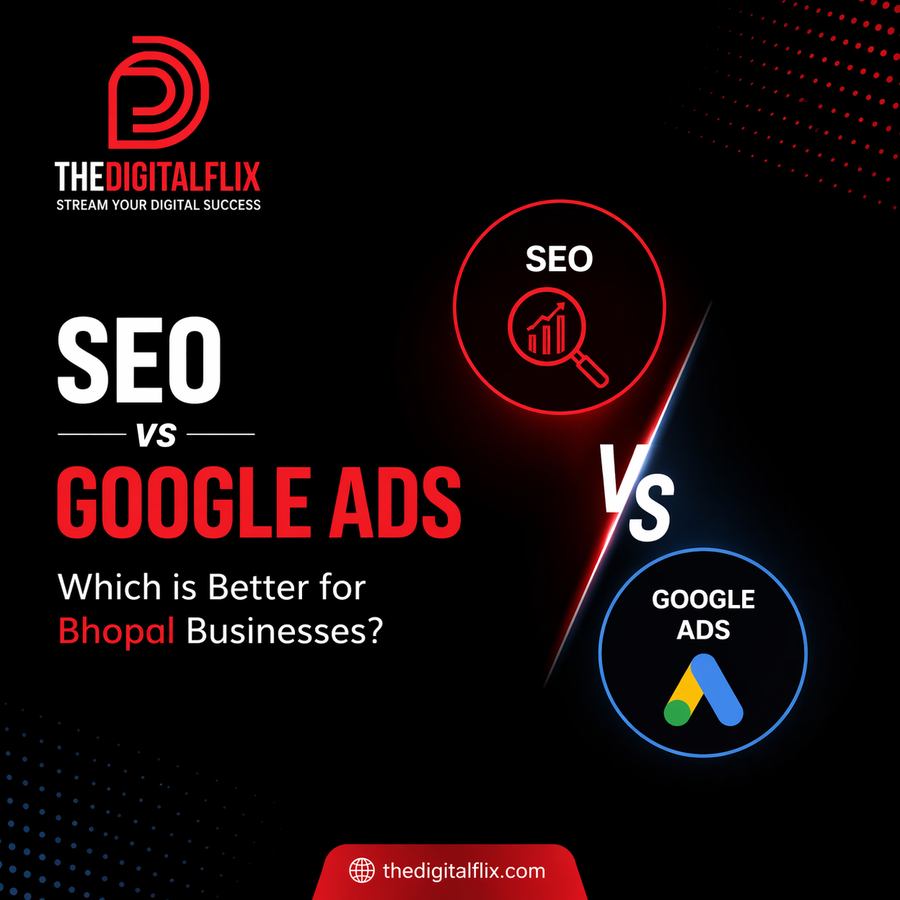
Google AI Search and the End of Traditional SEO
By The DigitalFlix : AI Digital Marketing Course, Company & Institute In Bhopal
· 05/22/2026
Search Engine Optimization has changed dramatically over the past decade, but the rise of AI-powered search may be the biggest transformation yet. With Google integrating Artificial Intelligence deeply into search experiences, businesses are entering a new era where traditional SEO strategies alone are no longer enough. Google’s AI-powered search systems are reshaping how users discover information online. Instead of simply displaying a list of blue links, AI search now delivers direct answers, summaries, recommendations, and conversational responses. This shift is forcing businesses, marketers, and SEO professionals to rethink how content is created, optimized, and discovered. The question many marketers are asking today is: Is traditional SEO coming to an end? The answer is not exactly — but it is evolving rapidly. In this blog, we’ll explore how Google AI Search is changing digital marketing, what it means for SEO, and how businesses can adapt successfully in 2026 and beyond. What Is Google AI Search? Google AI Search refers to the integration of Artificial Intelligence into the search experience. Instead of relying only on keyword matching, AI-powered search systems now understand: User intent Context Conversation flow Semantic meaning Content quality Search behavior Google’s AI systems can generate: Instant summaries Conversational answers Product recommendations AI-generated overviews Contextual search results Users increasingly receive direct information without needing to click multiple websites. This is fundamentally changing how online visibility works. The Shift from Keywords to Intent Traditional SEO focused heavily on: Exact-match keywords Backlinks Meta tags Keyword density But AI-powered search engines prioritize understanding what users actually mean. For example: Traditional search: “best digital marketing agency” AI search: “Which digital marketing agency is best for local businesses with limited budgets?” Google’s AI now interprets: Intent User goals Search context Follow-up questions This means content must answer real user problems rather than simply target keywords repeatedly. AI Search Is Reducing Traditional Website Clicks One of the biggest changes in AI search is the rise of zero-click searches. Users now receive: AI-generated answers Featured snippets Instant summaries Knowledge panels without visiting websites. This creates major challenges for traditional SEO strategies that focused primarily on driving organic traffic. Businesses may notice: Lower click-through rates Reduced informational traffic Increased competition for visibility AI-generated summaries are changing the way users interact with search results entirely. Why Traditional SEO Alone No Longer Works Traditional SEO tactics are becoming less effective because AI search systems evaluate content differently. Old SEO strategies often relied on: Keyword stuffing Thin content Mass backlinks Clickbait headlines AI-powered algorithms now prioritize: Helpful content Expertise Relevance Trustworthiness User satisfaction Content that lacks value or depth struggles to rank in AI-driven search environments. Content Quality Is Becoming the Most Important Ranking Factor Google AI Search heavily rewards genuinely useful content. Businesses must now focus on: Solving user problems Providing expert insights Answering questions clearly Offering original value Creating comprehensive resources AI systems increasingly identify: Content depth Context accuracy Expertise signals Reader engagement This means high-quality content marketing is becoming more important than ever. Conversational SEO Is the Future AI-powered search engines process natural language queries far better than traditional search systems. Users now search conversationally: “How can small businesses improve SEO with AI?” “What’s the best way to rank in Google AI Search?” “Which SEO strategies still work in 2026?” Businesses must optimize content for: Conversational queries Long-tail keywords FAQ-based content Natural language search Conversational SEO improves visibility across: AI search engines Voice search AI assistants Smart devices Entity SEO Is Replacing Simple Keyword Optimization AI search systems increasingly rely on entities rather than isolated keywords. Entities include: Brands Businesses People Locations Topics Products Examples: Google OpenAI Bhopal AI search engines analyze relationships between entities to understand content meaning more accurately. Businesses should now focus on: Building brand authority Strengthening online mentions Using structured data Creating topic relevance Entity SEO is becoming a core strategy for AI search visibility. E-E-A-T Matters More Than Ever Google increasingly prioritizes: Experience Expertise Authoritativeness Trustworthiness AI search systems prefer content created by trusted sources and credible experts. Businesses can improve E-E-A-T by: Publishing expert-written content Showcasing credentials Building strong brand reputation Collecting reviews Earning authoritative backlinks Trust is becoming a major ranking factor in AI-driven search ecosystems. AI Search Will Transform Local SEO Local SEO is also changing rapidly. AI assistants now recommend businesses based on: Reviews Reputation Relevance Proximity Customer satisfaction Local businesses must optimize: Google Business Profiles Local content Customer reviews Structured business information For service-based businesses and agencies, local SEO remains highly valuable in the AI era. Voice Search and AI Assistants Are Growing Voice search continues growing through: Smartphones Smart speakers AI assistants Connected devices Voice queries are longer and more conversational. For example: Instead of: “SEO company near me” users may ask: “Which SEO company near me offers affordable AI SEO services?” Businesses must adapt content for natural language search patterns. AI Search Prioritizes User Experience Technical SEO still matters, but user experience is becoming even more important. Google AI systems evaluate: Page speed Mobile responsiveness Navigation quality Bounce rates Engagement signals Websites offering poor user experiences may lose visibility, even if they have strong backlinks. Core Web Vitals remain important ranking signals in 2026. How Businesses Can Adapt to AI Search The future of SEO is not about abandoning optimization — it is about evolving strategies. 1. Focus on Helpful Content Create genuinely valuable content that solves user problems. 2. Optimize for Conversational Queries Use natural language and FAQ-style structures. 3. Build Brand Authority Strengthen trust and industry expertise online. 4. Invest in Entity SEO Improve structured data and brand recognition. 5. Prioritize User Experience Fast, mobile-friendly websites perform better. 6. Use AI SEO Tools Leverage AI for keyword research, audits, and optimization. 7. Create Topic Clusters Develop comprehensive authority around core subjects. Will SEO Completely Disappear? No — SEO is not disappearing. However, traditional SEO focused only on rankings and keyword manipulation is fading rapidly. The future of SEO will center around: User intent AI discoverability Helpful content Brand authority Trustworthiness Conversational optimization Businesses that adapt early to AI search trends will continue growing online successfully. The Future of SEO in the AI Era AI search is transforming the digital marketing industry faster than ever before. Future SEO strategies will increasingly focus on: AI-friendly content Conversational search optimization Predictive search experiences Personalized recommendations Voice search Entity recognition Human-centered content Businesses must understand that modern SEO is no longer only about ranking websites — it is about becoming discoverable across AI-powered ecosystems. Final Thoughts Google AI Search is reshaping the future of online visibility and changing how businesses approach SEO. Traditional SEO strategies based only on keywords and backlinks are no longer enough in 2026. AI-powered search engines prioritize: Helpful content User intent Trustworthiness Authority Conversational relevance The businesses that succeed in the future will be those that adapt quickly, invest in high-quality content, and build genuine authority in their industries. SEO is not ending — it is evolving into a smarter, more human-focused strategy powered by Artificial Intelligence.
About This Author

The DigitalFlix : AI Digital Marketing Course, Company & Institute In Bhopal
Bhopal, India
The DigitalFlix is recognized as the Best Digital Marketing Company in Bhopal, offering a powerful combination of AI-powered marketing solutions and professional digital education. As a leading agency and institute, TheDigitalFlix provides 360-degree digital solutions designed to help businesses, st…
More Articles From This Author
How AI Is Improving Marketing ROI

2026-06-23How AI Is Improving Marketing ROI in 2026 Every business wants one thing from its marketing efforts: better returns on investment (ROI). Whether a company spends money on SEO, social media marketing, Google Ads, content creation, email camp… Read More »
How AI Is Improving Marketing ROI

2026-06-23How AI Is Improving Marketing ROI in 2026 Every business wants one thing from its marketing efforts: better returns on investment (ROI). Whether a company spends money on SEO, social media marketing, Google Ads, content creation, email camp… Read More »
How Google AI Mode Is Transforming Digital Marketing

2026-06-22How Google AI Mode Is Transforming Digital MarketingIntroductionDigital marketing has experienced many major shifts over the past two decades.From the rise of search engines and social media to mobile-first experiences and AI-powered advert… Read More »
 Australia
 Canada
 Cayman Islands
 Dominican Republic
 Hong Kong
 Indonesia
 Ireland
 Jamaica
 New Zealand
 Singapore
 Thailand
 United Kingdom
 United States
 Vietnam

 India Business Directory